
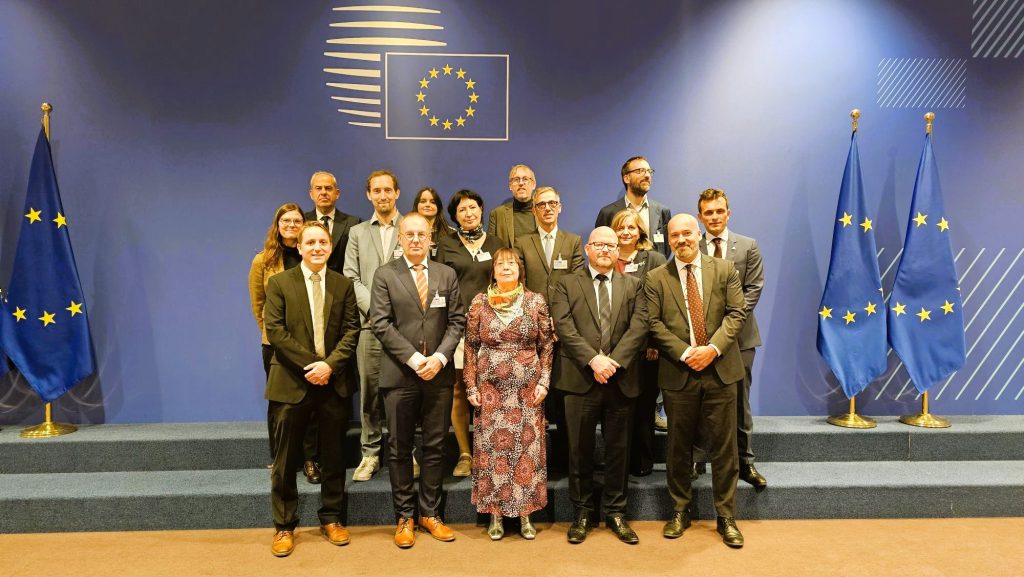
On 14 October, a delegation from the European Trade Union Confederation (ETUC), including representatives from Lithuania, participated in the Tripartite Social Summit in Brussels.
The Lithuanian Trade Union Confederation (LPSK) was represented by Tatjana Babrauskienė, Head of International Affairs at the Lithuanian Education and Science Trade Union.
At this high-level meeting, EU institutional leaders and social partners discussed European competitiveness, the creation of quality jobs, priorities for the future EU budget, and the future of the Single Market.
Tatjana Babrauskienė stressed that European integration must strengthen the position of working people rather than weaken their rights and social protections.
LPSK opposes initiatives that could treat worker protection standards as excessive regulation. EU directives should establish minimum standards of protection while allowing Member States to maintain higher labour standards. Collective agreements, paid leave and safe working conditions are important achievements for workers and must not be dismissed as bureaucratic burdens.
Trade union representatives also highlighted the importance of the future EU budget. Funding cuts could undermine programmes supporting workers’ training, employment, working parents and people affected by industrial change.
LPSK stresses that workers must not be made to bear the burden of economic crises and industrial transformation.
Another key priority is fairer taxation and a strong, independent European Social Fund to support employment, skills development and social inclusion.
Why is this summit important?
The Tripartite Social Summit is generally held twice a year, ahead of the European Council meetings in spring and autumn. It brings together EU institutional leaders, trade unions and employers’ organisations to discuss pressing economic and social issues.
The summit provides an opportunity for social partners to present their positions directly at the highest level of EU decision-making and to ensure that workers’ interests are taken into account when decisions shaping Europe’s future are made.
Photo credits: etuc.org